Pachamama, or Mother Earth, is a central deity associated with fertility in Andean beliefs. The goddess’s presence is strong in contemporary Andean communities, so much so that it’s central to many traditions. From ancient rituals to current cultural expressions, the Andean Earth Mother is widely present. This article explains who Pachamama is, her origins, her role in Andean cosmology, and how her living presence continues to shape daily life, traditions, and travel experiences across Peru, Bolivia, and the Andes today.
Explore the enduring presence of Pachamama through this video, featuring Andean rituals, offerings, and cultural traditions that honor Mother Earth. It brings a visual perspective to the beliefs and practices explored throughout this guide.
Explore everything about one of the most important Inca goddesses of the Andes
- What Is Pachamama? Meaning in Quechua
- Origins of Pachamama in Andean Cultures
- Pachamama in the Andean Cosmology
- Pachamama in Peru, Bolivia, and Ecuador Today
- Pachamama Rituals and Offerings (Despacho, Challa, Minga)
- Pachamama and Responsible Spiritual Tourism
- FAQs About Pachamama
What Is Pachamama? Meaning in Quechua
The term Pachamama comes from Quechua, the ancestral language of the Inca era, and literally means “Mother Earth“. “Pacha” means universe, world, earth, and even time, while “mama” translates as mother. Together, these terms define her as the deity who embodies the primary source of food, water, fertility, and life. This ancestral belief also connects with concepts such as love and protection.
Origins of Pachamama in Andean Cultures
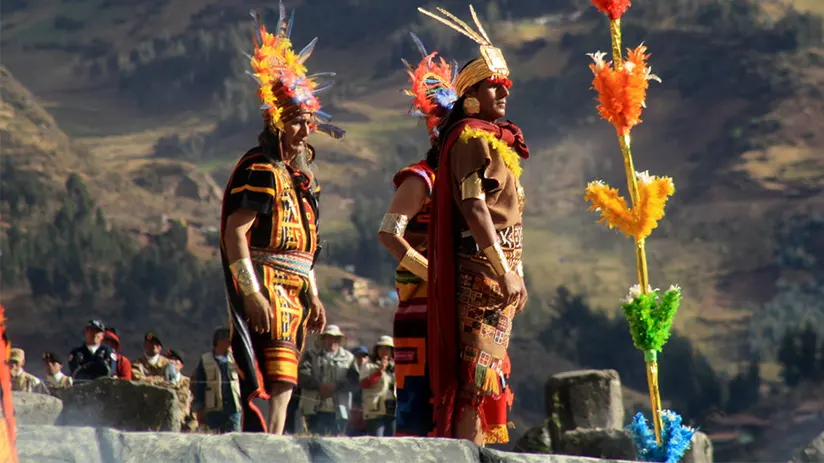
Spiritual beliefs played a central role in the daily life of pre-Columbian civilizations. The Incas recognized their beliefs about nature and sacred forces, which were present in their daily lives. They considered Inti (the sun god) their supreme deity, along with other fundamental deities such as Wiraqocha, the Apus (mountain spirits), and Quilla. All these were integral to their daily activities, including customs, festivities, traditions, and many others.
However, the goddess Pachamama was one of the most important because of her role in agriculture. Her importance was such that the ancient people constantly offered tributes and rituals in her honor. They intended their actions to invoke fertility and abundance in their lands, thus ensuring bountiful harvests throughout the year.
In 1532, Spanish forces invaded the Inca Empire in South America, specifically targeting the Inca civilization. After looting valuable artifacts, destroying structures, and subjugating the native peoples, the next step was to eradicate native beliefs. The aim was to replace all pagan beliefs with Catholicism. To achieve this, they took concrete actions, one of the most frequent being the construction of churches atop sacred temples.
Over time, Inca customs persisted despite their prohibitions, though largely unnoticed by the Spanish. Their artwork, rituals performed in hidden locations, and the blending of both beliefs reflected this. Thus, the presence of their traditions and deities remained intact, albeit somewhat more concealed. Tributes to the ancestral belief were no exception, and to this day, locals still regard her as an important figure.
Pachamama in Andean Cosmology
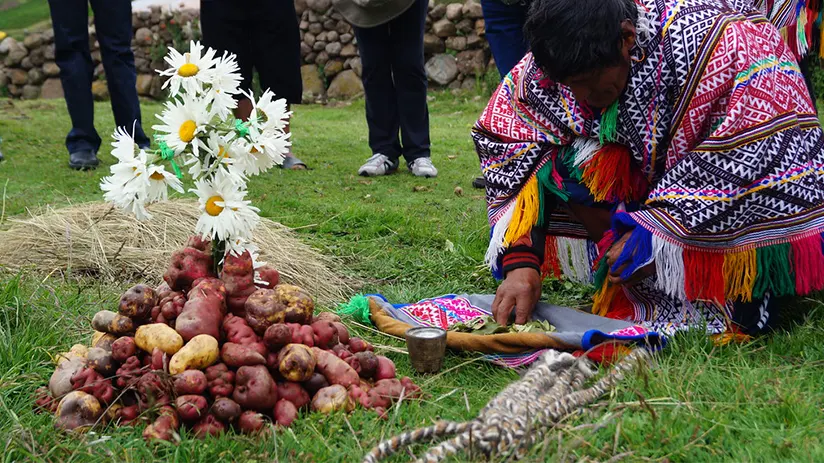
According to the Andean worldview of the Incas, Pachamama is the mother who nourishes and sustains all living beings. This goddess fertilizes the fields and brings abundance to the harvests and well-being to the community. She is part of the Andean duality, that is, the complementarity of one another, in this case, the god Inti. As an element that fulfills the feminine role of its masculine counterpart, she is of utmost importance.
The Andean peoples believe that the Andean earth deity not only provides resources but also demands respect and reciprocity. For them, giving and receiving are fundamental aspects that maintain balance. This principle also applies to their deities, to whom they made offerings, but we will not dwell on that point for now. Therefore, this ancestral belief is not only the physical earth but a supreme deity who represents basic aspects of the Andean worldview.
From a Western perspective, nature is often viewed as a resource to be managed or exploited. In contrast, the Andean worldview sees Pachamama as a relational being rather than an object. Instead of ownership, there is reciprocity; instead of control, there is balance. This difference explains why many Andean communities prioritize harmony with the land over economic gain, a contrast that many travelers notice when visiting highland villages around Cusco.
Pachamama in Peru, Bolivia, and Ecuador Today

Despite modernity and globalization, devotion to the earth goddess remains alive. While all these changes have enriched it with new meanings, concepts, and symbols, the tradition continues constantly. Accodingly, many people today practice rituals in veneration of the Andean earth deity. From Andean cities to people around the world, many people adopt values inspired by Pachamama to honor and protect the environment.
In favor of sustainability and environmental stewardship, many internalize concepts that essentially belong to Pachamama. The search for ways to live in harmony with nature is among the most common practices. To understand where these traditions remain strongest today, it is necessary to look at several South American countries. Below are some of the main countries that celebrate the Andean deity today:
- Peru: Peru has a strong connection to Andean beliefs, and Pachamama is no exception. The celebrations in her honor coincide with agricultural cycles, especially in Andean cities. This is part of the most important traditional Andean customs in Cusco, Puno, and the Sacred Valley. In addition, some hotels, restaurants, and tour operators incorporate Andean rituals into their cultural programs, often beginning projects or trips with a small offering to Mother Earth. Environmental initiatives, sustainable tourism projects, and reforestation campaigns are also frequently acts that contribute to the care of Pachamama through modern and transparent practices.
- Bolivia: This country is another place where the recognition of this deity is integrated into daily life. Both in rural and urban areas, Bolivians have a deep connection with the land. Celebrations in honor of this ancestral belief are most frequent during the month of August.
- Ecuador: The indigenous communities of the Ecuadorian Altiplano usually celebrate ceremonies in honor of Pachamama. While its presence is not as widespread as in the previous countries, it is also common.
- Argentina: The Argentine provinces of Jujuy and Salta celebrate rituals in honor of Mother Earth. During these festivities, food and music help create an atmosphere conducive to expressing gratitude.
Pachamama Rituals and Offerings (Despacho, Challa, Minga)

Rituals, ceremonies, and offerings are a fundamental part of reciprocity with Mother Earth. This is the most common way to give back to the earth a little of what it gives, as a way of showing respect, with practices varying depending on region and season. Below are some of the most representative ways Andean people worship this earth deity:
Pago a la Tierra (Despacho)
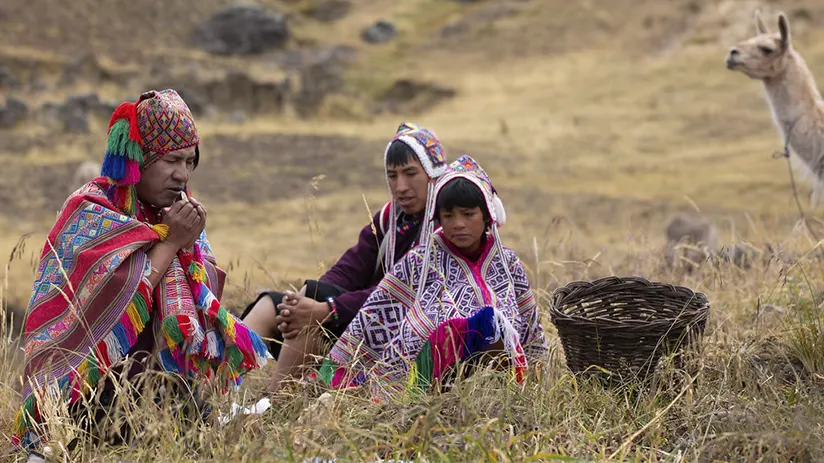
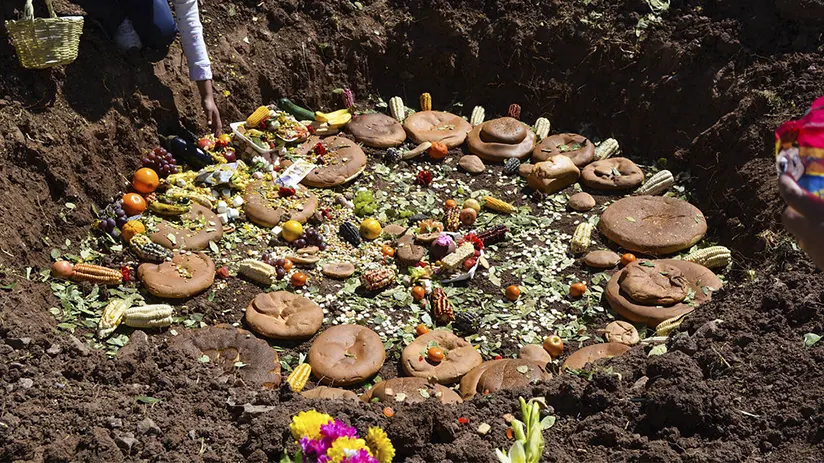
The payment to the earth, or despacho, is a ceremony where participants offer objects in honor of the earth. An Andean priest generally performs this ritual and must strictly follow a series of steps. Among the main symbolic offerings are coca leaves, candies, food, and drinks. The participants usually wear typical Andean clothing and other symbols of Andean identity and heritage.
For example, travelers visiting Cusco or the Sacred Valley can sometimes witness or participate in a despacho ceremony as part of a guided cultural experience. These rituals are most commonly performed before important events such as the start of a trek, a community celebration, or the inauguration of a new home or business. Local priests explain the meaning of each element, allowing visitors to better understand the deep spiritual connection between Andean people and the land.
Pachamama Day – August 1

Every year on August 1st, many Andean regions celebrate Pachamama Day, an ideal time for giving thanks. According to ancestral beliefs, this is when “the earth opens her mouth” to receive thanks and petitions. This day coincides with the earth’s rest period according to the harvest calendar, so it’s an auspicious time. Besides, rituals, offerings, dances, songs, and more are some expressions of gratitude that take place in the Andean regions.
For travelers, August is the best time to observe Pachamama traditions in the Andes. In and around Cusco, ceremonies take place in plazas, rural communities, and even archaeological sites. Some villages organize collective offerings, traditional music, and communal meals, providing visitors with a rare opportunity to see how ancestral beliefs are still woven into daily life.
The Challa Ceremony
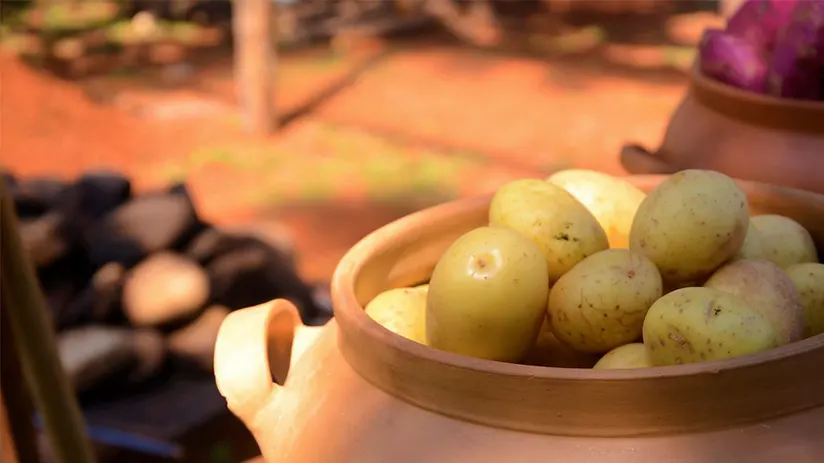
This custom consists of offering libations of products to the earth, such as beverages, coca leaves, alcohol, and food. Although it is frequently during the planting and harvesting season, the challa is a recurring practice among Andean people. People also make these offerings to give thanks for the food and to ask for prosperity.
The Minga Tradition
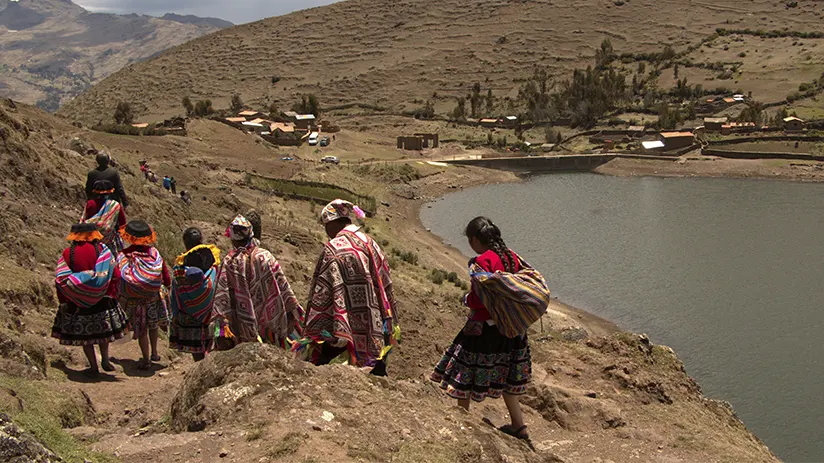
Collective work for the benefit of the community in which they live is also known as Minga. People link this practice to the earth goddess because they ask for her blessing and the success of their work together. Agricultural and construction tasks are the most frequent, always carried out with cooperation, mutual aid, and enthusiasm.
Pachamama and Responsible Spiritual Tourism

The popularity of everything related to the Andean earth deity has grown in recent years, and many people have taken notice. As a result, many travelers want to interact with Andean villages where Pachamama traditions are still alive. The reason is clear: the connection these traditions have with respect for the environment. Nonetheless, others do it out of mere curiosity; whatever the case, the experiences vary widely depending on how communities choose to involve visitors.
Those interested in spirituality can easily find tourism options that help them make direct contact. Most of these options offer offerings to Mother Earth and rituals to honor Pachamama, while maintaining local traditions. For those who prefer a more secular approach, we recommend showing respect, as these practices are also part of the local culture.
In places like Cusco, the Sacred Valley, and Lake Titicaca, responsible tourism programs increasingly emphasize cultural respect rather than spectacle. Ethical operators work directly with local communities, ensuring that rituals are performed on their own terms and not staged solely for tourists. Visitors are encouraged to listen, learn, and participate humbly, reinforcing the idea that Pachamama is not a performance but a living tradition.
FAQs About Pachamama

What does Pachamama mean in Andean culture?
Pachamama means “Mother Earth” in the Quechua and Aymara languages, and she represents nature, fertility, and life itself. In Andean culture, people view Pachamama as a living being who provides food, water, and protection. The Andean peoples must respect and care for this deity in return for all the prosperity it brings.
Is Pachamama a religion or a belief?
Pachamama is not a formal religion, but a spiritual belief deeply rooted in Andean worldviews. This indigenous cosmology now coexists with Catholic traditions, creating a blend of ancestral and Christian practices in daily life. This interesting panorama is especially evident in places like Cusco and the Sacred Valley.
How is Pachamama honored in Peru and Bolivia?
In Peru and Bolivia, people honor Pachamama through rituals, offerings, and festivals, especially during August. People give thanks by offering food, coca leaves, chicha, and other symbolic items to the earth. The main purpose is to ask for protection, health, and good harvests.
Can travelers participate in Pachamama rituals?
Yes, travelers can participate in Pachamama rituals, usually in guided or community-led ceremonies. Participation should always be respectful, with an open mind and a willingness to follow local customs. Usually, indigenous leaders provide basic insights that help newcomers to enter this fantastic world.
What is the Pago a la Tierra ceremony?
Pago a la Tierra is a traditional ceremony in which people present offerings to Pachamama as a sign of gratitude and balance. Many Andean cities do this sign of gratitude and balance with a mix of objects. In addition, the ritual asks for harmony between humans and nature, especially in August.
Is Pachamama still important today?
Yes, Pachamama remains important today, especially among indigenous communities. She also inspires modern movements focused on environmental protection, sustainability, and respect for nature, making her symbolism relevant far beyond the Andes. Likewise, it is of utmost importance to understand the spiritual meaning behind Machu Picchu and other iconic Andean sites.
“EARTH EXISTS FOR ALL OF US, AND WE MUST SHOW RESPECT”
To conclude, Pachamama represents a profound connection between humanity and nature that continues to shape Andean identity and values. Her presence reminds us of the importance of gratitude, balance, and respect for the earth. These lessons remain meaningful in a modern world facing environmental challenges. We hope you have learned from this fantastic worldview.
Peru has so much to offer; it can be hard to know where to start. With many years of experience in the tourism sector, Machu Travel Peru is happy to help with anything regarding your trip to Peru and any tours around it. Let us help you make your Peruvian travel experience unforgettable! Contact us today to plan your dream adventure!